Random featured paper
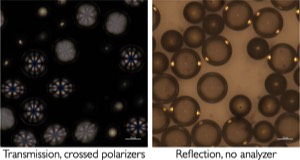
N. Popov, & J.P.F. Lagerwall, Frontiers in Soft Matter 2, 991375 (2022).
The combination of anisotropic boundary conditions and topological constraints acting on a spherical shell of nematic liquid crystal confined between aqueous phases gives rise to peculiar but well-defined configurations of the director field, and thus of the optic axis that defines the impact of the nematic birefringence. While the resulting optics of nematic shells has been extensively investigated in transmission, studies of the reflection behavior are scarce. Here we show that nematic shells exhibit specific light guiding paths mediated by birefringence-modulated total internal reflection (TIR) within the shell. With stabilizers promoting tangential boundary conditions, shells show immobile antipodal spots revealing the locations of maximum effective refractive index, but their intensity is modulated by the polarization of the illuminating light. With normal-aligning stabilizers, shells instead show bright arcs separated by dark spots, and these follow the rotation of the polarization of the illuminating light. Reflection polarizing microscopy thus offers a valuable complement to the more common characterization in transmission, adding data that can be helpful for accurately mapping out director fields in shells of any liquid crystal phase. Moreover, the TIR-mediated light guiding paths may offer interesting handles to localize photopolymerization of reactive liquid crystal shells or to dynamically modulate the response of light-triggered liquid crystal elastomer shell actuators.
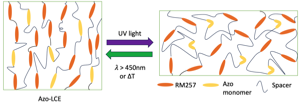
Najiya & J.P.F. Lagerwall, Adv. Opt. Mater. 13, 16, 2500160 (2025).
Photoresponsive liquid crystal elastomers (LCEs) that can undergo light‐induced actuation at a selected operation temperature range are potent functional materials that can be applied in diverse contexts, including biotechnology and soft robotics. Recent advances in LCE research highlighted the benefits of oligomeric precursors, which enable the use of 3D‐printing, microfluidic or other shear‐based processing to shape and simultaneously program the LCE. The synthesis of photoresponsive nematic LCE sheets derived from oligomers functionalized with azobenzene moieties is reported, followed by a systematic analysis of their actuation as a function of temperature with and without UV light irradiation. By studying the nematic–isotropic transition before and during UV irradiation the optimum photoactuation operating temperature is identified. For the LCEs, this is found to be as low as 30 °C, with near‐identical performance at 37 °C. This renders them ideal for application in biotechnological contexts, hence the new LCEs may enable isothermally operated soft actuators embedded in organoids or living systems. It is discussed how this can be achieved without exposing the cells to harmful UV light.
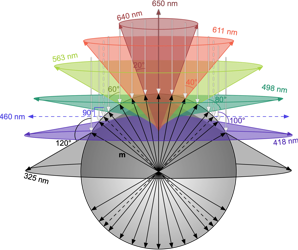
J.P.F. Lagerwall. SPIE San Francisco meeting; Emerging Liquid Crystal Technologies XIX (2024).
Cholesteric Spherical Reflectors (CSRs) are omnidirectional selective retroreflectors enabled by the ability of cholesteric liquid crystals (CLCs) to self-assemble with helicoidally modulated long-range orientational order, turning them into a liquid chiral photonic crystal with one-dimensional periodicity. The liquid state allows us to easily mold the CLC into spherical units, with stabilizers in the surrounding liquid phases ensuring the appropriate boundary conditions. By varying the composition of the CLC we can continuously tune the wavelength band of retroreflection across the visible spectrum and into the ultraviolet (UV) as well as infrared (IR) regimes, choose whether the CRSs reflect right- or left-handed circular polarization, and we can make them polymerizable, such that the CSRs are easily turned into solids after annealing, allowing easy manipulation and incorporation into diverse matrices. This opens for numerous innovative applications, from anti-counterfeiting and supply chain track-and-trace solutions, via human-invisible signage optimized for robots and AR device wayfinding, to the pixelation of structural color for generating non-spectral colors without absorption or indiscriminate scattering, and even enhanced-sensitivity disease testing. In my talk, I will briefly introduce the concept of CSRs and highlight their salient features, and then I will focus on our on-going efforts to solve important societally and industrially relevant problems by taking advantage of the opportunities offered by CSRs.
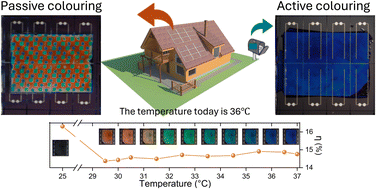
Y.-S. Zhang, H. Arif Yetkin, H. Agha, S. Gharabeiki, R. Kizhakidathazhath, L. Merges, R.G. Poeira, J.P.F. Lagerwall & P.J. Dale, Energy & Env. Sci., 18, 884-896 (2025).
While the current surging global energy crisis highlights the urgent need for a transition to renewable energy sources, the large physical footprint—as experienced by humans—of the required installations reduces public acceptance and therefore strongly hampers its development. Solar modules, for electricity and/or for heating, do not have the audible impact of wind turbines but their visible impact is currently prohibitive for many installation options, such as on the façades of buildings. Here we show that coatings of cholesteric liquid crystals (CLCs) can turn any black solar modules into passive surfaces with arbitrary colour or active surfaces with temperature sensitive colouration, yet with minimum loss of power conversion efficiency (PCE), thanks to their self-organized helical modulation generating structural colour. Most conspicuously, we combine red, green, and blue pixels to generate a non-spectral colour that blends into wooden or metallic backgrounds with a 50% relatively higher PCE than a ceramic ink equivalent since CLCs neither absorb nor scatter light. Further, we show thermochromic solar cells with colour tunable across the full visible spectrum, maintaining 88% of their original PCE. We argue these coatings can be developed to cover solar modules with either arbitrary full-colour images, allowing them to be aesthetically integrated into building façades and roofs in a way that is fully acceptable by the public, or with active colour changing to add functional value, while always keeping high PCE.
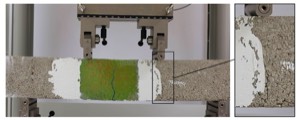
T. Čamo, R. Kizhakidathazhath, D. Waldmann-Diederich & J.P.F. Lagerwall, Struct. Health Monitor., 25, 1, 537-549 (2026).
As one cannot know in advance where a crack will form, currently used discrete crack monitors may miss to detect a crack if it grows outside the monitored regions. A high-resolution continuous 2D strain monitor applied to the entire surface of interest would solve this problem. Cholesteric liquid crystal elastomers (CLCEs) provide this ability, and with recent advances in chemistry, they can be applied very easily, similar to a paint coating. Here we demonstrate the detection of new cracks and monitoring of their progression using CLCE coatings applied to an extruded polystyrene insulation panel, an aerated concrete brick, and a reinforced concrete beam, respectively. Regardless of where and in which direction a crack develops, it can be easily detected thanks to a change in color. By analyzing the new color, quantitative information on the crack width can be extracted. Considering the ease of applying the CLCEs to standard building materials, the high 2D resolution strain monitoring with clear optical detection that it provides, and the low cost of the solution, we argue that CLCE coatings can have a revolutionary impact on structural health monitoring for buildings and infrastructure, to be constructed or already existing.
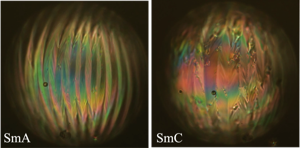
A. Sharma, M. Magrini, Y. Han, D.M. Walba, A. Majumdar & J.P.F. Lagerwall, Soft Matter, 20, 9586-9596 (2024).
The layered structure of smectic liquid crystals cannot develop unobstructed when confined to spherical shells with layers extending in the radial direction, since the available cross section area increases from the inside to the outside of the shell yet the number and thickness of layers must be constant. For smectic-A (SmA) liquid crystals, with the layer normal m parallel to the director n, the frustration breaks up the texture into spherical lune domains with twist deformations of alternating sense, overlaid with a herringbone-like secondary modulation and mediated via localized bend regions where the boundary conditions are violated. The SmC phase has more degrees of freedom to resolve the frustration thanks to its non-zero tilt angle τ between n and m, but its response to tangential shell confinement was never studied. We show experimentally and theoretically that the lunes in shells undergoing a SmA–SmC transition become twice as wide and half as many and they lose the secondary modulation, adopting a configuration with no layer twist but uniform layer bend if τ reaches a large enough value. Our study expands our understanding of how smectics respond to spherical confinement and it opens new soft matter research opportunities, given the rich diversity of phases with SmC-like symmetry, including chiral and spontaneously polarized phases.
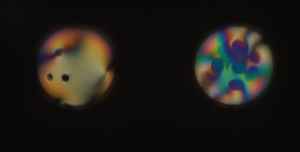
Y. Han, J.P.F. Lagerwall & A. Majumdar, Phys. Rev. E, 109, 064702 (2024).
The transition from a nematic to an isotropic state in a self-closing spherical liquid crystal shell with tangential alignment is a stimulating phenomenon to investigate, as the topology dictates that the shell exhibits local isotropic points at all temperatures in the nematic phase range, in the form of topological defects. The defects may thus be expected to act as nucleation points for the phase transition upon heating beyond the bulk nematic stability range. Here we study this peculiar transition, theoretically and experimentally, for shells with two different configurations of four +1/2 defects, finding that the defects act as the primary nucleation points if they are co-localized in each other's vicinity. If the defects are instead spread out across the shell, they again act as nucleation points, albeit not necessarily the primary ones. Beyond adding to our understanding of how the orientational order-disorder transition can take place in the shell geometry, our results have practical relevance for, e.g., the use of curved liquid crystals in sensing applications or for liquid crystal elastomer actuators in shell shape, undergoing a shape change as a result of the nematic-isotropic transition.
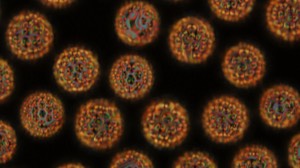
X. Ma, Y. Han, Y.-S. Zhang, Y. Geng, A. Majumdar & J.P.F. Lagerwall, Nat. Commun., 15, 1404 (2024).
Multiple emulsions are usually stabilized by amphiphilic molecules that combine the chemical characteristics of the different phases in contact. When one phase is a liquid crystal (LC), the choice of stabilizer also determines its configuration, but conventional wisdom assumes that the orientational order of the LC has no impact on the stabilizer. Here we show that, for the case of amphiphilic polymer stabilizers, this impact can be considerable. The mode of interaction between stabilizer and LC changes if the latter is heated close to its isotropic state, initiating a feedback loop that reverberates on the LC in form of a complete structural rearrangement. We utilize this phenomenon to dynamically tune the configuration of cholesteric LC shells from one with radial helix and spherically symmetric Bragg diffraction to a focal conic domain configuration with highly complex optics. Moreover, we template photonic microparticles from the LC shells by photopolymerizing them into solids, retaining any selected LC-derived structure. Our study places LC emulsions in a new light, calling for a reevaluation of the behavior of stabilizer molecules in contact with long-range ordered phases, while also enabling highly interesting photonic elements with application opportunities across vast fields.
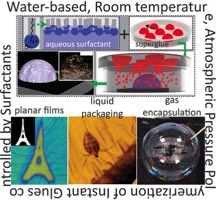
V.S.R. Jampani, M. Škarabot, U. Mur, D. Baigl, U. Jonas, J.P.F. Lagerwall, M. Ravnik, M. Anyfantakis, Adv. Mater., 36, 40, 240843 (2024).
Thin polymer films (TPFs) are indispensable elements in numerous technologies ranging from liquid encapsulation to biotechnology to electronics. However, their production typically relies on wet chemistry involving organic solvents or chemical vapor deposition, necessitating elaborate equipment and often harsh conditions. Here, an eco-friendly, fast, and facile synthesis of water-templated interfacial polymers based on cyanoacrylates (superglues, CAs) that yield thin films with tailored properties is demonstrated. Specifically, by exposing a cationic surfactant-laden water surface to cyanoacrylate vapors, surfactant-modulated anionic polymerization produces a manipulable thin polymer film with a thickness growth rate of 8 nm min−1. Furthermore, the shape and color of the film are precisely controlled by the polymerization kinetics, wetting conditions, and/or exposure to patterned light. Using various interfaces as templates for film growth, including the free surface of drops and soap bubbles, the developed method advantageously enables in situ packaging of chemical and biological cargos in liquid phase as well as the encapsulation of gases within solidified bubbles. Simple, versatile, and biocompatible, this technology constitutes a potent platform for programmable coating and soft/smart encapsulation of fluids.
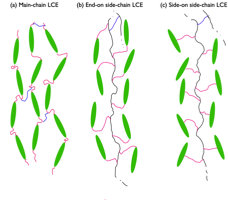
J.P.F. Lagerwall, Prog. Mater., 1, e9 (2023).
Liquid crystal elastomers (LCEs) are programmable materials par excellence. I review the history and state of the art of LCE materials and processing development from the perspective of the important remaining step of moving out of the academic research lab and applying LCEs as soft actuators or strain sensors. After a brief introduction for the non-expert of what LCEs are and which their main advantages and limitations are, I discuss the key breakthroughs that LCE research has undergone over its 50-year history. Building on this and drawing from fresh results from on-going research, I consider possible future development trajectories that would help address the outstanding key obstacles to reach mass production at competitive cost. I end with discussing a selected set of application scenarios with good opportunities for LCEs to perform functions that no other material could deliver. Specifically, I focus on responsive buildings incorporating LCE actuator fibres and sheets/ribbons, structural health monitoring with LCE strain sensors monitoring crack growth and propagation or alerting residents of buildings exposed to dangerous levels of deformation, and kinetic and responsive garments incorporating LCE fibre actuators and/or strain sensors.
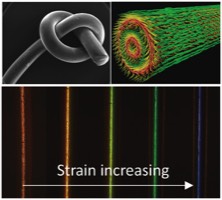
Y. Geng & J.P.F. Lagerwall, Adv. Sci., 10, 9, 2301414 (2023).
Cylindrically symmetric cholesteric liquid crystal elastomer (CLCE) fibers templated by tubular confinement are reported, displaying mechanochromic, thermochromic, and thermomechanical responses. The synthesis inside a sacrificial tube secures radial orientation of the cholesteric helix, and the ground state retroreflection wavelength is easily tuned throughout the visible spectrum or into the near-infrared by varying the concentration of a chiral dopant. The fibers display continuous, repeatable, and quantitatively predictable mechanochromic response, reaching a blue shift of more than -220 nm for 180% elongation. The cylindrical symmetry renders the response identical in all directions perpendicular to the fiber axis, making them exceptionally useful for monitoring complex strains, as demonstrated in revealing local strain during tying of different knots. The CLCE reflection color can be revealed with high contrast against any background by taking advantage of the circularly polarized reflection. Upon heating, the fibers respond-fully reversibly-with red shift and radial expansion/axial contraction. However, there is no transition to an isotropic state, confirming a largely forgotten theoretical prediction by de Gennes. These fibers and the easy way of making them may open new windows for large-scale application in advanced wearable technology and beyond.
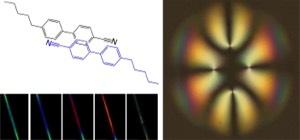
J.P.F. Lagerwall, Liq. Cryst., 51, 8-9, 1296-1310 (2023).
Liquid crystal-forming cyanobiphenyls are truly extraordinary molecules that have had an enormous impact on liquid crystal research and applications since they were first synthesised. This impact is, on the one hand, due to the exceptionally convenient physical properties of the main characters, 5CB and 8CB, allowing easy experiments at room temperature, as well as their commercial availability at reasonable cost. On the other hand, the cyanobiphenyl chemical structure leads to some quite peculiar characteristics in terms of organisation at the molecular scale, which are sometimes well recognised and even utilised, but often the awareness of these peculiarities is not strong. This perspective article reviews the use of cyanobiphenyls in making liquid crystal shells and liquid crystal core fibres, in sensing, as a medium for simultaneously aligning and dispersing carbon nanotubes, and as highly useful solvents for reactive mesogens that can be polymerised into anisotropic networks. This choice is very much motivated by how cyanobiphenyls have impacted our group’s research throughout the years, which is the basis for the examples I provide. Nevertheless, I believe they serve well to illustrate the immense usefulness of cyanobiphenyls in innovating research and applications related to liquid crystals.
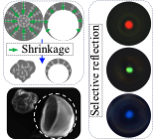
Y. Geng, C. Honorato-Rios, J.H. Noh & J.P.F. Lagerwall, Adv. Mater., 36, 8, 2305251 (2023).
The wavelength- and polarization-selective Bragg reflection of visible light exhibited by films produced by drying cholesteric liquid crystal (CLC) suspensions of cellulose nanocrystals (CNCs) render these biosourced nanoparticles highly potent for many optical applications. While the conventionally produced films are flat, the CLC-derived helical CNC arrangement would acquire new powerful features if given spherical curvature. Drying CNC suspension droplets does not work, because the onset of kinetic arrest in droplets of anisotropic colloids leads to severe buckling and loss of spherical shape. Here, these problems are avoided by confining the CNC suspension in a spherical microshell surrounding an incompressible oil droplet. This prevents buckling, ensures strong helix pitch compression, and produces single-domain cholesteric spherical reflector particles with distinct visible color. Interestingly, the constrained shrinkage leads to spontaneous puncturing, leaving every particle with a single hole through which the inner oil phase can be extracted for recycling. By mixing two different CNC types at varying fractions, the retroreflection color is tuned throughout the visible spectrum. The new approach adds a versatile tool in the quest to utilize bioderived CLCs, enabling spherically curved particles with the same excellent optical quality and smooth surface as previously obtained only in flat films.
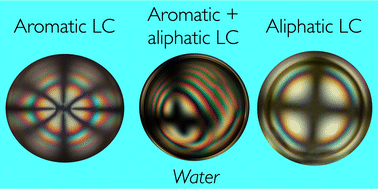
A. Sharma,R. Kizhakidathazhath & J.P.F. Lagerwall, Soft Matter, 19, 2637-2645 (2023).
We carry out a strategic and systematic variation of the molecular structure of liquid crystals (LCs) molded into spherical shells, surrounded by aqueous isotropic phases internally and externally. Contrary to common expectation, based on previous studies that have almost exclusively been carried out with cyanobiphenyl-based LCs, we find that the director field aligns normal to the LC–water interface when we use an LC molecule that is entirely non-aromatic. We propose to explain this by the inability of such an LC to participate in hydrogen bonding, rendering the normal configuration favorable as it minimizes the molecular cross section in contact with the water. We also find that cyano-terminated LC molecules contribute greatly to stabilizing the LC–water interface. This explains why shells made of cyanobiphenyl LCs are much more stable than shells of LCs with non-cyano-terminated molecules, even if the latter exhibit aromatic cores. Unstable LC shells can be stabilized very efficiently, however, through the addition of a low concentration of molecules that are cyano-terminated, preferably below the threshold for dimerization. Our study provides a much clarified understanding of how the molecular structure dictates the stability and alignment of LC shells, and it will enable a diversification of LC shell research and applications to systems where the use of non-cyanobiphenyl LCs is required.
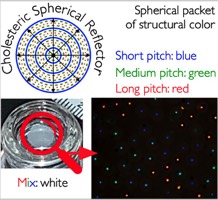
H. Agha, Y.-S. Zhang, Y. Geng & J.P.F. Lagerwall, Adv. Photon. Res., 4, 4, 2200363 (2023).
While structural color is a powerful means of obtaining saturated and durable pigments that minimize absorption, scattering, and negative environmental impact, appearing naturally in animals and plants as well as in carefully designed artificial composites, it is fundamentally limited to spectral colors, leaving white and other mixed colors elusive. It also normally suffers from a strong viewing angle dependence, making color definition difficult. Herein, it is demonstrated that these challenges can be overcome by using cholesteric spherical reflectors (CSRs), spheres of polymerized cholesteric liquid crystal with radial alignment of the self-assembled helical structure. Exhibiting omnidirectional selective retroreflectivity of well-defined color, CSRs are discrete “packages” of structural color. This allows them to be used as pixels for generating nonspectral colors, following the principle of digital displays. A method of creating densely packed monolayers of CSRs with red (R), green (G), and blue (B) retroreflection is developed. Mixing them in equal proportions gives a white surface. By embedding the CSRs in an index matching transparent medium, nonselective specular reflections and scattering are avoided. The approach can be used to create arbitrary colors, including nonspectral ones, without any absorption or nonselective scattering, opening doors to decorating surfaces as desired while minimizing light loss.
.
Fifteen most important papers indicated with an asterisk (*).
Invited articles
- The good, the bad and the ugly faces of cyanobiphenyl mesogens in selected tracks of fundamental and applied liquid crystal research.
Jan P.F. Lagerwall,
Liquid Crystals (2023). DOI: 10.1080/02678292.2023.2292621. - Liquid crystal elastomer actuators and sensors: Glimpses of the past, the present and perhaps the future.
Jan P.F. Lagerwall,
Programmable Materials. 1, e9 (2023). - Continuous flow microfluidic production of arbitrarily long tubular liquid crystal elastomer peristaltic pump actuators.
Najiya, Nikolay Popov, Venkata Subba Rao Jampani, and Jan P.F. Lagerwall,
Small (2022). DOI: 10.1002/smll.202204693. Special issue on Synthetic Biology and Biomimicry. - *Unclonable human-invisible machine vision markers leveraging the omnidirectional chiral Bragg diffraction of cholesteric spherical reflectors.
Hakam Agha, Yong Geng, Xu Ma, Deniz Isinsu Avsar, Rijeesh Kizhakidathazhath, Yan-Song Zhang, Ali Tourani, Hriday Bavle, Jose-Luis Sanchez-Lopez, Holger Voos, Mathew Schwartz, and Jan P.F. Lagerwall,
Light, Science and Applications, 11, no. 309 (2022). Special issue to celebrate 10th anniversary of the journal. - Birefringence-modulated total internal reflection in liquid crystal shells
Nikolay Popov and Jan P. F. Lagerwall
Frontiers in Soft Matter (Editor's showcase: Liquid Crystals), DOI: 10.3389/frsfm.2022.991375 (2022) - Topological defect-guided regular stacking of focal conic domains in hybrid-aligned smectic liquid crystal shells

JungHyun Noh and Jan P.F. Lagerwall, Crystals (Special issue in honor of Noel Clark's 80th birthday), 11, p. 913 (2021) - Liquid crystal elastomer shells with topological defect-defined actuation: Complex shape morphing, opening/closing, and unidirectional rotation
Anjali Sharma, Andy Stoffel and Jan P.F. Lagerwall, J. Appl. Phys. (Special topic on Programmable Liquid Crystal Elastomers; selected as Editor's Pick), 129, 17, p. 174701 (2021) - Linking Physical Objects to Their Digital Twins via Fiducial Markers Designed for Invisibility to Humans
Mathew Schwartz, Yong Geng, Hakam Agha, Rijeesh Kizhakidathazhath, Danqing Liu, Gabriele Lenzini and Jan P.F. Lagerwall, Multifunctional Materials (Special issue on Morphological Computing), 4, 2, p. 022002 (2021) - From equilibrium liquid crystal formation and kinetic arrest to photonic bandgap films using suspensions of cellulose nanocrystals
Christina Schütz, Johanna R, Bruckner, Camila Honorato-Rios, Zornitza Tosheva, Manos Anyfantakis and Jan P.F. Lagerwall, Crystals (Special issue on Novel Trends in Lyotropics), 10, 3, pp. 199 (2020) - Influence of head group and chain length of surfactants used for stabilising liquid crystal shells
Anjali Sharma and Jan P.F. Lagerwall
Liq. Cryst. (Claudio Zannoni Festschrift), 45, 13-15, pp. 2319-2328 (2018) - *Cholesteric liquid crystal shells as enabling material for information-rich design and architecture

Mathew Schwartz, Gabriele Lenzini, Yong Geng, Peter Rønne, Peter Ryan, Jan P.F. Lagerwall
Adv. Mater., 30, 30, p. 1707382 (2018). Progress Report, featured with frontispiece - Electrospun Composite Liquid Crystal Elastomer Fibers
Anshul Sharma and Jan P.F. Lagerwall
Materials, 11, 3, p. 393 (2018) - Sub-second dynamic phototuning of alignment in azodendrimer-doped nematic liquid crystal shells
JungHyun Noh, Venkata Subba Rao Jampani, Osamu Haba, Koichiro Yonetake, Hideo Takezoe, Jan P.F. Lagerwall
J. Moliq. Liq. (Yuri Reznikov tribute issue), 267, pp. 197-204 (2018) - Elucidating the fine details of cholesteric liquid crystal shell reflection patterns
Yong Geng, JungHyun Noh, Irena Drevensek-Olenik, Romano Rupp and Jan Lagerwall
Liq. Cryst. (John Goodby Festschrift), 44, 12-13, pp. 1948-1959 (2017) - Liquid Crystals in Micron-Scale Droplets, Shells and Fibers
Martin Urbanski, Catherine Reyes, JungHyun Noh, Anshul Sharma, Yong Geng, Venkata Subba Rao Jampani and Jan P. F. Lagerwall
J. Phys: Cond. Matt., (invited topical review), 29, 133003 (2017) - Non-electronic gas sensors from electrospun mats of liquid crystal core fibers for detecting volatile organic compounds at room temperature
Catherine Reyes, Anshul Sharma and Jan P. F. Lagerwall
Liquid Crystals (30th anniversary issue), DOI: 10.1080/02678292.2016.1212287 (2016) - Equilibrium Liquid Crystal Phase Diagrams and Detection of Kinetic Arrest in Cellulose Nanocrystal Suspensions
Camila Honorato-Rios, Anja Kuhnold, Johanna Bruckner, Rick Dannert, Tanja Schilling and Jan P. F. Lagerwall
Frontiers in Materials (special research topic “Anisotropy in Deformable Biomaterials”), 3, 21, DOI: 10.3389/fmats.2016.00021 (2016) - Macroscopic control of helix orientation in films dried from cholesteric liquid crystalline cellulose nanocrystal suspensions
Ji Hyun Park, JungHyun Noh, Christina Schütz, German Salazar-Alvarez, Giusy Scalia, Lennart Bergström, and Jan P. F. Lagerwall
ChemPhysChem, 15, 7, p. 1477 (2014), part of a special issue on ‘physical properties and behavior of liquid crystals’. - Liquid crystal-functionalization of electrospun polymer fibers (Perspective article)
Dae Kyom Kim, Minsik Hwang and Jan P. F. Lagerwall
J. Polym. Sci. B Polym. Phys. 51, 11, pp. 855-867 (2013) Note: download is free for everyone, requiring no subscription to the journal - Tuning the defect configurations in nematic and smectic liquid crystalline shells
Hsin-Ling Liang, JungHyun Noh, Rudolf Zentel, Per Rudquist and Jan P. F. Lagerwall
Philos. Trans. A 371, 1988, 20120258 (2013) - Morphology and Core Continuity of Liquid-Crystal-Functionalized, Coaxially Electrospun Fiber Mats Tuned via the Polymer Sheath Solution
Giusy Scalia, Eva Enz, Oronzo Calò, Dae Kyom. Kim, Minsik Hwang, Jong Hwan Lee, and Jan P.F. Lagerwall
Macromol. Mater. Eng. 298, 5, pp. 583.589 (2013) - A new era for liquid crystal research: applications of liquid crystals in soft matter nano-, bio- and microtechnology (Review article)
Jan P. F. Lagerwall and Giusy Scalia
Curr. Appl. Phys., 12, 6, pp. 1387-1412 (2012) Note: download is free for everyone; no subscription required. - Coaxial electrospinning of liquid crystal-containing poly(vinyl pyrrolidone) microfibers
Eva Enz, Ute Baumeister, Jan Lagerwall
Beilstein J. Org. Chem. 5, 58, doi:10.3762/bjoc.5.58 (2009), themed issue on ‘Progress in Liquid crystal Chemistry’.
Note: download is free for everyone, requiring no subscription to the journal - Complex Chirality at the Nanoscale
Jan P. F. Lagerwall and Frank Giesselmann
ChemPhysChem, 11, 5, pp. 975-977 (2010) - Carbon nanotubes in liquid crystals (Review article)

Jan P. F. Lagerwall, Giusy Scalia
Download from University of Luxembourg repository here
J. Mater. Chem. 18, 25, pp. 2890-2898 (2008), special issue on ‘Liquid crystals beyond display applications’. - Current topics in smectic liquid crystal research (Review article)

Jan P. F. Lagerwall, Frank Giesselmann
ChemPhysChem, 7, 1, pp. 20-45 (2006)
Regular journal articles
- *Circularly polarized structural color pigments tunable across the full visible spectrum
Deniz Ișınsu Avșar and Jan P. F. Lagerwall.
Adv. Opt. Mater., DOI: 10.1002/adom.202503818 (2026). - Oligomer-Derived Photoresponsive Liquid Crystal Elastomers with Biocompatible Operating Temperature
Najiya Najiya and Jan P. F. Lagerwall.
Adv. Opt. Mater., 13, 16, 2500160 (2025). - *Arbitrary and Active Colouring of Solar Cells with Negligible Loss of Efficiency
Yan-Song Zhang, Hasan Arif Yetkin, Hakam Agha, Sevan Gharabeiki, Rijeesh Kizhakidathazhath, Lena Merges, Ricardo G. Poeira, Jan P.F. Lagerwall and Phillip J. Dale
Energy & Env. Sci., in press (2024). DOI: 10.1039/D4EE03010A - How smectic-A and smectic-C liquid crystals resolve confinement-induced frustration in spherical shells
Anjali Sharma, Mitchell Magrini, Yucen Han, David M. Walba, Apala Majumdar and Jan P. F. Lagerwall.
Soft Matter, in press (2024). DOI 10.1039/D4SM01263A - *Optical crack detection and assessment using cholesteric liquid crystal elastomers
Tarik Camo,, Rijeesh Kizhakidathazhath, Danièle Waldmann-Diederich and Jan PF Lagerwall
Struct. Health Monitoring, in press (2024). DOI: 10.1177/14759217241296831 - Water-Templated Growth of Interfacial Superglue Polymers for Tunable thin Films and In-Situ Fluid Encapsulation
Venkata S.R. Jampani, Miha Škarabot, Urban Mur, Damien Baigl, Ulrich Jonas, Jan P. F. Lagerwall, Miha Ravnik and Manos Anyfantakis.
Adv. Mater., 36, 40, 2408243 (2024). - Topological Defects as Nucleation Points of the Nematic--Isotropic Phase Transition in Liquid Crystal Shells
Yucen Han, Jan P. F. Lagerwall and Apala Majumdar.
Phys. Rev. E., 109, 6, 064702 (2024). - Tunable templating of photonic microparticles via liquid crystal order-guided adsorption of amphiphilic polymers in emulsions
Xu Ma, Yucen Han, Yan-Song Zhang, Yong Geng, Apala Majumdar and Jan P. F. Lagerwall,
Nat. Commun., 15, 1404 (2024) - Cholesteric Spherical Reflectors with Tunable Color from Single-Domain Cellulose Nanocrystal Microshells
Yong Geng, Camila Honorato-Rios, JungHyun Noh and Jan P. F. Lagerwall,
Adv. Mater., 36, 8, 2305251 (2024) - Multiresponsive Cylindrically Symmetric Cholesteric Liquid Crystal Elastomer Fibers Templated by Tubular Confinement
Yong Geng, and Jan P. F. Lagerwall,
Adv. Sci., 10, 2301414 (2023) - Impact of mesogenic aromaticity and cyano termination on the alignment and stability of liquid crystal shells.
Anjali Sharma, Rijeesh Kizhakidathazhath and Jan P. F. Lagerwall,
Soft Matter, 19, 14, 2637-2645 (2023) - *Pixelating Structural Color with Cholesteric Spherical Reflectors
Hakam Agha, Yan-Song Zhang, Yong Geng, and Jan P. F. Lagerwall,
Adv. Photon. Research, 4, 4, 2200363 (2023) - Embedding intelligence in materials for responsive built environment: a topical review on liquid crystal elastomers and sensors
Mathew Schwartz and Jan P. F. Lagerwall,
Build. Environ., 226, 109714 (2022) - *Robust cholesteric liquid crystal elastomer fibres for mechanochromic textiles
Yong Geng, Rijeesh Kizhakidathazhath, and Jan P. F. Lagerwall,
Nat. Mater., 21, 1441 (2022). - Lipid islands on liquid crystal shells
Anjali Sharma, Deepak Gupta, Giusy Scalia and Jan P.F. Lagerwall,
Phys. Rev. Research, 4, 013130 (2022) - Combining responsiveness and durability in liquid crystal-functionalised electrospun fibres
with crosslinked sheath
Shameek Vats, Lawrence W. Honaker, Francesco Basoli and Jan P.F. Lagerwall,
Liq. Cryst., 49, 5, p.690–698 (2022) - Electrospinning Ethanol–Water Solutions of Poly(Acrylic Acid): Nonlinear Viscosity Variations and Dynamic Taylor Cone Behavior
Shameek Vats, Lawrence W. Honaker, Margaret Frey, Francesco Basoli and Jan P.F. Lagerwall,
Macromol. Mater. Eng., 307, 2100640 (2022) - *Quantitative volatile organic compound sensing with liquid crystal core fibers
Katrin Schelski, Catherine Reyes, Lukas Pschyklenk, Peter-Michael Kaul and Jan P.F. Lagerwall,
Cell Rep. Phys. Sci, 2, 12, 100661 (2021) - *Stable electrospinning of core-functionalized coaxial fibers enabled by the minimum-energy interface given by partial core–sheath miscibility
Shameek Vats, Manos Anyfantakis, Lawrence W. Honaker, Francesco Basoli and Jan P.F. Lagerwall,
Langmuir, 37, 45, pp.13625–13277 (2021) - Measuring the Anisotropy in Interfacial Tension of Nematic Liquid Crystals
Lawrence W. Honaker, Anjali Sharma and Jan P.F. Lagerwall,
Crystals, 11, 6, p.687 (2021) - *Encoding Hidden Information onto Surfaces Using Polymerized Cholesteric Spherical Reflectors
Yong Geng, Rijeesh Kizhakidathazhath and Jan P.F. Lagerwall,
Adv. Funct. Mater., 31, 21, p.2100399 (2021), featured on Advanced Science News, photonics.com and phys.org - *Interrogating helical nanorod self-assembly with fractionated cellulose nanocrystal suspensions
Camila Honorato-Rios and Jan P.F. Lagerwall,
Comm. Mater., 1, artno 69 (2020) - Responsive Photonic Liquid Marbles
Manos Anyfantakis, Venkata Subba Rao. Jampani, Rijeesh Kizhakidathazhath, Bernard P. Binks and Jan P.F. Lagerwall,
Angew. Chem. Int. Ed., DOI: 10.1002/anie.202008210 (2020) - Dynamic tuning of the director field in liquid crystal shells using block copolymers
JungHyun Noh, Yiwei Wang, Hsin-Ling Liang, Venkata Subba Rao Jampani, Apala Majumdar and Jan P.F. Lagerwall,
Phys. Rev. Research, 2, 033160 (2020) - Disruption of electrospinning due to water condensation into the Taylor cone
Catherine G. Reyes and Jan P.F. Lagerwall,
ACS Appl. Mater. Interf., 12, 23, pp. 26566-26576 (2020) - High-contrast imaging of 180° ferroelectric domains by optical microscopy using ferroelectric liquid crystals
Guillaume F. Nataf, Maël Guennou, Giusy Scalia, Xavier Moya, Tim D. Wilkinson, Jan P. F. Lagerwall,
Appl. Phys. Lett., 116, 21, 212901 (2020) - *Facile anisotropic deswelling method for realizing large-area cholesteric liquid crystal elastomers with uniform structural color and broad-range mechanochromic response
Rijeesh Kizhakidathazhath, Yong Geng, Venkata Subba Rao Jampani,
Cyrine Charni, Anshul Sharma, Jan P.F. Lagerwall,
Adv. Funct. Mater. 30, 7, 1909537 (2020) - Realignment of Liquid Crystal Shells Driven by Temperature-Dependent Surfactant Solubility
Anjali Sharma, V.S.R. Jampani and Jan P.F. Lagerwall,
Langmuir, 35, 34, pp. 11132–11140 (2019) - Elastic sheath–liquid crystal core fibres achieved by microfluidic wet spinning
Lawrence W. Honaker, Shameek Vats, Manos Anyfantakis and Jan P.F. Lagerwall,
J. Mater. Chem. C, 7, 37, pp. 11588–11596 (2019) - Isotropic-isotropic phase separation and spinodal decomposition in liquid crystal-solvent mixtures

Catherine G. Reyes, Jörg Baller, Takeaki Araki and Jan P.F. Lagerwall,
Soft Matter, 15, 30, pp. 6044-6054 (2019). Featured on journal cover. - *Liquid Crystal Elastomer Shell Actuators with Negative Order Parameter
Venkata Subba Rao Jampani, Ross. H. Volpe, Kevin Regungo de Sousa, Joana Ferreira Machado, Christopher M. Yakacki Jan P.F. Lagerwall,
Sci. Advances, 5, 4, eaaw2476 (2019) - Micrometer scale porous buckling shell actuators based on liquid crystal networks
Venkata Subba Rao Jampani, Dirk J. Mulder, Kevin Reguengo De Sousa, Anne-Hélène Gélébart, Jan P.F. Lagerwall, Albertus P.H.J. Schenning
Adv. Funct. Mater. 28, 31, 1801209 (2018) - Fractionation of cellulose nanocrystals: enhancing liquid crystal ordering without promoting gelation
Camila Honorato-Rios, Claudius Lehr, Christina Schütz, Roland Sanctuary, Mikhail A. Osipov Jörg Baller, Jan P.F. Lagerwall
NPG Asia Materials, 10, 455-465 (2018) - Microfluidic Tensiometry Technique for the Characterization of the Interfacial Tension between Immiscible Liquids
Lawrence Honaker, Jan Lagerwall, Venkata Subba Rao Jampani
Langmuir, 34, 7, pp. 2403–2409 (2018) - Through the spherical looking-glass: asymmetry enables multicolored internal reflection in cholesteric liquid crystal shells

Y. Geng , J.-H. Jang, K.-G, Noh , J. Noh, J. Lagerwall and S.-Y. Park
Adv. Opt. Mater., 6, 1700923 (2018) - Why organically functionalized nanoparticles increase the electrical conductivity of nematic liquid crystal dispersions
M. Urbanski, J.P.F. Lagerwall
J. Mater. Chem. C., 5, 34, pp. 8802-8809 (2017) - Taming Liquid Crystal Self-Assembly: The Multifaceted Response of Nematic and Smectic Shells to Polymerization
J. Noh, B. Henx, J.P.F. Lagerwall
Adv., Mater, DOI 10.1002/adma.201603158 (2016) - Correlation between structural properties and iridescent colors of cellulose nanocrystalline films
M. Ličen, B. Majaron, J. Noh, C. Schütz, L. Bergström, J. Lagerwall, I. Drevenšek-Olenik
Cellulose, DOI 10.1007/s10570-016-1066-z (2016) - Enhancing Self-Assembly in Cellulose Nanocrystal Suspensions Using High-Permittivity Solvents
Johanna Bruckner, Anja Kuhnhold, Camila Honorato-Rios, Tanja Schilling and Jan P. F. Lagerwall
Langmuir, DOI: 10.1021/acs.langmuir.6b02647 (2016) - *High-fidelity spherical cholesteric liquid crystal Bragg reflectors generating unclonable patterns for secure authentication
Yong Geng, JungHyun Noh, Irena Drevensek-Olenik, Romano Rupp, Gabriele Lenzini and Jan P. F. Lagerwall
Sci. Rep., 6, Article number: 26840, DOI: 10.1038/srep26840 (2016)
The article has been featured in multiple popular science web sites, see http://www.nature.com/articles/srep26840/metrics - Nanoparticles dispersed in liquid crystals: Impact on conductivity, low-frequency relaxation and electro-optical performance
Martin Urbanski and Jan P. F. Lagerwall
J. Mater. Chem. C, 4, 16, pp. 3485-3491 (2016) - Influence of interface stabilisers and surrounding aqueous phases on nematic liquid crystal shells
JungHyun Noh, Kevin Reguengo da Sousa and Jan P. F. Lagerwall
Soft Matter, 12, 2, pp. 367 - 372 (2016) - Multifunctional responsive fibers produced by dual liquid crystal core electrospinning
YooMee Kye, Changsoon Kim and Jan P. F. Lagerwall
J. Mater. Chem. C, 3, 8979-8985 (2015) - Ultra-long ordered nanowires from the concerted self-assembly of discotic liquid crystal and solvent molecules
Ji Hyun Park , Kyung Ho Kim , Yung Woo Park , Jan P. F. Lagerwall , and Giusy Scalia
Langmuir, 31, 34, 9432–9440 (2015) - Rod Packing in Chiral Nematic Cellulose Nanocrystal Dispersions Studied by Small-Angle X-ray Scattering and Laser Diffraction
Christina Schütz, Michael Agthe, Andreas B. Fall, Korneliya Gordeyeva, Valentina Guccini, Michaela Salajková,
Tomás S. Plivelic, Jan P. F. Lagerwall, German Salazar-Alvarez, and Lennart Bergström
Langmuir, 31, 23, 6507–6513 (2015) - Influence of Wetting on Morphology and Core Content in Electrospun Core–Sheath Fibers
Dae Kyom Kim and Jan Lagerwall
ACS Appl. Mater. Interf., 6, 18, 16441−16447 (2014) - Cellulose nanocrystal-based materials: from liquid crystal self- assembly and glass formation to multifunctional thin films
Jan Lagerwall, Christina Schütz, Michaela Salajkova, JungHyun Noh, Ji Hyun Park, Giusy Scalia and Lennart Bergström
NPG Asia Materials, 6, e80, doi:10.1038/am.2013.69 (2014), open access - *Tunable Multicolored Patterns From Photonic Cross Communication Between Cholesteric Liquid Crystal Droplets

JungHyun Noh, Hsin-Ling Liang, Irena Drevensek-Olenik and Jan Lagerwall
Download from University of Luxembourg repository here
J. Mater. Chem. C, 2, 5, p. 806 (2014) - One-piece micropumps from liquid crystalline core-shell particles
Featured in the May 2013 issue of Soft Matter World
Click here for a a 1-page popular science introduction to this paper.
Eva-Kristina Fleischmann, Hsin-Ling Liang, Nadia Kapernaum, Frank Giesselmann, Jan P.F. Lagerwall, and Rudolf Zentel
Nat. Commun., 8, (2012), DOI: 10.1038/ncomms2193 - Utilizing the Krafft phenomenon for achieving ideal micelle-free surfactant-stabilized nanoparticle suspensions
Sarah Dölle, Bob-Dan Lechner, Ji Hyun Park, Stefan Schymura, Jan P. F. Lagerwall and Giusy Scalia
Angewandte Chemie - Int. Ed., 51, pp. 3254-3257 (2012) - Towards tunable defect arrangements in smectic liquid crystal shells utilizing the nematic-smectic transition in hybrid-aligned geometries

Hsin-Ling Liang, Rudolf Zentel, Per Rudquist and Jan Lagerwall
Download from University of Luxembourg repository here
Soft Matter, 8, 20, pp. 5443 - 5450 (2012) - Effects of chain branching and chirality on liquid crystalline phases of bent-core molecules:
blue phases, de Vries transitions and switching of diastereomeric states
Hale Ocak, Belkiz Bilgin-Eran, Marko Prehm, Stefan Schymura, Jan P. F. Lagerwall and Carsten Tschierske
Download from University of Luxembourg repository here
Soft Matter, 7, 18, pp. 8266 - 8280 (2011) - Liquid Crystals in Novel Geometries prepared by Microfluidics and Electrospinning
Hsin-Ling Liang, Eva Enz, Giusy Scalia and Jan Lagerwall
Download from University of Luxembourg repository here
Mol. Cryst. Liq. Cryst., 549, pp. 69-77 (2011) - Nematic-smectic transition under confinement in liquid crystalline colloidal shells
Featured in the December 2011 issue of Soft Matter World
Hsin-Ling Liang, Stefan Schymura, Per Rudquist and Jan Lagerwall
Download from University of Luxembourg repository here
Phys. Rev. Lett., 106, 24, 247801 (2011) - Filament formation in carbon nanotube-doped lyotropic liquid crystals
Stefan Schymura, Sarah Dölle, Jun Yamamoto and Jan Lagerwall
Download from University of Luxembourg repository here
Soft Matter, 7, 6, 2663 - 2667 (2011) - Tailor-designed polyphilic promotors for stabilizing dispersions of carbon nanotubes in liquid crystals
Martin Kühnast, Carsten Tschierske and Jan Lagerwall
Download from University of Luxembourg repository here
Chem. Commun., 46, pp. 6989-6991 (2010) - Towards Efficient Dispersion of Carbon Nanotubes in Thermotropic Liquid Crystals
Stefan Schymura, Martin Kühnast, Vanessa Lutz, Stefan Jagiella, Ursula Dettlaff-Weglikowska, Siegmar Roth, Frank Giesselmann, Carsten Tschierske, Giusy Scalia, and Jan Lagerwall
Adv. Funct. Mater., 20, 19, pp. 3350–3357 (2010) - Electrospun microfibres with temperature sensitive iridescence from encapsulated cholesteric liquid crystal
Highlighted on the journal cover page
Eva Enz and Jan Lagerwall
Download from University of Luxembourg repository here
J. Mater. Chem., 20, 33, pp. 6866-6872 (2010) - Self-assembled ordered structures in thin films of HAT5 discotic liquid crystal
P. Morales, J. Lagerwall, P. Vacca, S. Laschat, and G. Scalia,
Beilstein J. Org. Chem. 6, 51, doi:10.3762/bjoc.6.51 (2010) Note: download is free for everyone, requiring no subscription to the journal - Macroscopic-scale carbon nanotube alignment via self-assembly in lyotropic liquid crystals
S. Schymura, E. Enz, S. Roth, G. Scalia, J.P.F. Lagerwall
Download from University of Luxembourg repository here
Synth. Met., 159, 21-22, pp. 2177-2179 (2009) - Electrolyte effects on the stability of nematic and lamellar lyotropic liquid crystal phases
– colligative and ion-specific aspects
Ute Dawin, Jan P.F. Lagerwall and Frank Giesselmann
J. Phys. Chem. B, 113, 33, pp. 11414-11420 (2009) - On the balance between syn- and anticlinicity in smectic phases formed by achiral hockey-stick mesogens with and without chiral dopants
E. Enz, S. Findeisen-Tandel, R. Dabrowski, F. Giesselmann, W. Weissflog, U. Baumeister, and J. Lagerwall,
Download from University of Luxembourg repository here
J. Mater. Chem., 19, 19, pp. 2950-2957 (2009) - Coaxial electrospinning of microfibres with liquid crystal in the core
J.P.F. Lagerwall, J.T. McCann, E. Formo, G. Scalia, and Y. Xia
Download from University of Luxembourg repository here
Chem. Commun., 42, pp. 5420-5422 (2008) - Spontaneous macroscopic carbon nanotube alignment via colloidal suspension in
hexagonal columnar lyotropic liquid crystals
G. Scalia, C. von Bühler, C. Hägele, S. Roth, F. Giesselmann, and J.P.F. Lagerwall
Download from University of Luxembourg repository here
Soft Matter, 4, 3, pp. 570-576 (2008) - Order-disorder molecular model of the smectic A – smectic C phase transition in materials with conventional and anomalously weak layer contraction
M. V. Gorkunov, M. A. Osipov, J.P.F. Lagerwall and F. Giesselmann
Download from University of Luxembourg repository here
Phys. Rev. E, 76, 5, p. 051706 (2007) - Carbon nanotubes in liquid crystals as versatile functional materials
G. Scalia, J.P.F. Lagerwall, S. Schymura, M. Haluska, F. Giesselmann, and S. Roth
Phys. Status Solidi B, 244, 11, pp. 4212-4217 (2007) - Molecular model for de Vries type smectic-A–smectic-C phase transition in liquid crystals
M. V. Gorkunov, F. Giesselman, J. P. F. Lagerwall, T. J. Sluckin and M. A. Osipov
Download from University of Luxembourg repository here
Phys. Rev. E, 75, 060701(R) (2007) - Antiferroelectric Liquid Crystals with Induced Intermediate Polar Phases and the Effects of Doping with Carbon Nanotubes
Jan P. F. Lagerwall, Roman Dabrowski, Giusy Scalia
Download from University of Luxembourg repository here
J. Non-Cryst. Solids, 353, 47-51, pp. 4411-4417 (2007) - Partitioning and reorientational dynamics of phenylalcohols in SDS lyotropic liquid crystalline mesophases: an ALC-µSR study
Aleksandra Martyniak, Herbert Dilger, Iain McKenzie, Robert Scheuermann, Jan P. F. Lagerwall, Emil Roduner
Colloid Surf. A, 309, 1-3, pp. 224-230 (2007) - Nanotube alignment using lyotropic liquid crystals
Jan P. F. Lagerwall, Giusy Scalia, Miroslav Haluska, Ursula Dettlaff-Weglikowska,
Siegmar Roth, Frank Giesselmann
Adv. Mater. 19, 3, pp. 359-364 (2007) - Simultaneous alignment and dispersion of carbon nanotubes with lyotropic liquid crystals
Jan P. F. Lagerwall, Giusy Scalia, Miroslav Haluska, Ursula Dettlaff-Weglikowska,
Frank Giesselmann, Siegmar Roth
Phys. Status Solidi B, 246, 13. pp. 3046-3049 (2006) - Effect of phenyl rings in liquid crystal molecules on SWCNTs studied by Raman spectroscopy
Giusy Scalia, Jan P. F. Lagerwall, Miroslav Haluska, Ursula Dettlaff-Weglikowska,
Frank Giesselmann, Siegmar Roth
Phys. Status Solidi B, 246, 13. pp. 3238-3241 (2006) - On the change in helix handedness at transitions between the Sm-C* and Sm-Ca* phases in chiral smectic liquid crystals
Jan P. F. Lagerwall, Frank Giesselmann, Mikhail A. Osipov
Download from University of Luxembourg repository here
Liq. Cryst. 33, 6. pp. 625-633 (2006) - The peculiar optic, dielectric and x-ray diffraction properties of a fluorinated de Vries asymmetric-diffuse-cone-model ferroelectric liquid crystal
This paper was the second most downloaded article in the 2006 volume of the journal ‘Liquid Crystals’, as of 18.5.2007.
Jan P. F. Lagerwall, David Coleman, Eva Körblova, Chris Jones, Renfan Shao, José M. Otón, David M. Walba, Noel A. Clark, Frank Giesselmann
Download from University of Luxembourg repository here
Liq. Cryst. 33, 1, pp. 17-24 (2006) - Frustration between syn- and anticlinicity in mixtures of chiral and non-chiral tilted smectic-C-type liquid crystals
Jan P. F. Lagerwall, Gerd Heppke, Frank Giesselmann
Download from University of Luxembourg repository here
Eur. Phys. J. E 18, 1, pp. 113-121 (2005) - Electrolyte effects on the nematic-isotropic phase transition in lyotropic liquid crystals
Prabir K. Mukherjee, Jan P. F. Lagerwall, Frank Giesselmann
Liq. Cryst. 32, 10, pp. 1301-1306 (2005) - Chiral smectic C subphases induced by mixing a bistereogenic antiferroelectric liquid crystal with a non-chiral liquid crystal
Jan P. F. Lagerwall, Frank Giesselmann, Sebastian Rauch, Gerd Heppke, Per Rudquist and Sven T. Lagerwall
Download from University of Luxembourg repository here
Ferroelectrics, 315, pp. 221-230 (2005) - A study of a bistereogenic mesogen for the development of orthoconic antiferroelectric liquid crystal materials
Jan P. F. Lagerwall, Chris Yates, Sebastian Rauch and Gerd Heppke
Download from University of Luxembourg repository here
Ferroelectrics, 315, pp. 213-219 (2005) - Differences between smectic homo- and copolysiloxanes as a consequence of microphase separation
Martin Rößle, Lydia Braun, Dieter Schollmeyer, Rudolf Zentel,
Jan P. F. Lagerwall, Frank Giesselmann, Ralf Stannarius
Liq. Cryst. 32, 5, pp. 533-538 (2005) - Demonstration of the antiferroelectric aspect of the helical superstructures in
Sm-C*, Sm-Cα* and Sm-Ca* liquid crystals
Jan P. F. Lagerwall
Download from University of Luxembourg repository here
Phys. Rev. E, 71, pp. 051703 (2005) - Generation of frustrated liquid crystal phases by mixing an achiral N–SmC mesogen with an antiferroelectric chiral smectic liquid crystal
Jan P. F. Lagerwall, Frank Giesselmann, Christine Selbmann, Sebastian Rauch, Gerd Heppke
Download from University of Luxembourg repository here
J. Chem. Phys. 122, 14, pp. 144906 (2005) - A chameleon chiral polar liquid crystal: rod-shaped when nematic, bent-shaped when smectic
Jan P. F. Lagerwall, Frank Giesselmann, Michael D. Wand and David M. Walba
Chem. Mater. 16, 19, pp. 3606 - 3615 (2004) - Polarity-directed analog electrooptic switching in a low-polarization chiral smectic liquid crystal with positive dielectric anisotropy
Jan P. F. Lagerwall, Alexander Kane, Noel A. Clark and David M. Walba
Download from University of Luxembourg repository here
Phys. Rev. E, 70, p. 031703 (2004) - (-)-Isopinocampheol substituted mesogens: an investigation of the effect of bulky terminal groups in chiral smectic liquid crystals
Chris Yates, Jan P. F. Lagerwall, Maurizio Nobili, Sebastian Rauch and Gerd Heppke
Download from University of Luxembourg repository here
Ferroelectrics, 311, pp. 67 - 75 (2004) - On the origin of high optical director tilt in a partially fluorinated orthoconic antiferroelectric liquid crystal
Jan P. F. Lagerwall, Frank Giesselmann, Alexander Saipa and Roman Dabrowski
Liq. Cryst. 31, 9, pp. 1175-1184 (2004) - Ferroelectric polysiloxane liquid crystals with ’de Vries’-type smectic A* -smectic C* transitions
Martin Rößle, Rudolf Zentel, Jan Lagerwall and Frank Giesselmann
Liq. Cryst. (Preliminary Communication) 31, 6, pp. 883 - 887 (2004) - On the phase sequence of antiferroelectric liquid crystals and its relation to orientational and translational order
Jan P. F. Lagerwall, Per Rudquist, Sven T. Lagerwall and Frank Giesselmann
Liq. Cryst. 30, 4, pp. 399 - 414 (2003) - Tilt plane orientation in antiferroelectric liquid crystal cells and the origin of the pretransitional effect
Per Rudquist, Jan P. F. Lagerwall, Johann G. Meier, Koen D’havé and Sven T. Lagerwall
Download from University of Luxembourg repository here
Phys. Rev. E 66, 061708 (2002) - Antiferroelectric liquid crystal mixture without smectic layer shrinkage at the direct Sm-A* - Sm-Ca * transition
Frank Gießelmann, Jan P. F. Lagerwall, Gunnar Andersson and Marc D. Radcliffe
Download from University of Luxembourg repository here
Phys. Rev. E 66, 051704 (2002) - Optical and X-ray evidence of the de Vries Sm-A*–Sm-C* transition in a non-layer shrinkage ferroelectric liquid crystal with very weak interlayer tilt correlation
Jan P. F. Lagerwall, Frank Giesselmann, Marc Radcliffe
Download from University of Luxembourg repository here
Phys. Rev. E, 66, 031703 (2002) - Phases, phase transitions and confinement effects in a series of antiferroelectric liquid crystals
Jan P. F. Lagerwall, Deven D. Parghi, Daniel Krüerke, Fathi Gouda, Pontus Jägemalm
Liq. Cryst. 29, 2, pp. 163-178 (2002) - Surface- and Field-Induced AFLC Structures Detected by Dielectric Spectroscopy
Jan Lagerwall, Per Rudquist, Sven Lagerwall, Bengt Stebler
Download from University of Luxembourg repository here
Ferroelectrics, 277, pp. 553 - 564 (2002) - Optic, electrooptic and dielectric properties of novel antiferroelectric liquid crystal compounds
Pontus Jägemalm, Jan P. F. Lagerwall, Anders Dahlgren, Lachezar Komitov, Avtar Matharu, Chris Grover, Fathi Gouda, Abdul A. Kutub
Download from University of Luxembourg repository here
Ferroelectrics, 244, pp. 147-157 (2000) - Electrooptic and Dielectric Properties of New Antiferroelectric Liquid Crystal Mixtures
Gunnar Andersson, Roman Dabrowski, Witold Drzewinski, Jan P. F. Lagerwall, Marek Matuszczyk, Tomasz Matuszczyk, Pawel Perkowski and Zbigniew Raszewski
Download from University of Luxembourg repository here
Ferroelectrics, 244, pp. 137-146 (2000) - Antiferroelectric Liquid Crystals with 45° Tilt – A New Class of Promising Electro-Optic Materials
Koen D’havé, Anders Dahlgren, Per Rudquist, Jan P. F. Lagerwall, Gunnar Andersson, Marek Matuszczyk, Sven T. Lagerwall, Roman Dabrowski and Witold Drzewinski
Download from University of Luxembourg repository here
Ferroelectrics, 244, pp. 115-128 (2000) - On the Coexistence of SmC* and SmCA* Phases in Binary Chiral-Dopant Antiferroelectric Mixtures
Jan P. F. Lagerwall, Deven D. Parghi and Gerd Heppke
Download from University of Luxembourg repository here
Ferroelectrics, 244, pp. 211-221 (2000) - The Dependence on the Helical Pitch of the Antiferroelectric Dielectric Modes
Jan P. F. Lagerwall, Tobias Fütterer, Dirk Moro and Gerd Heppke
Download from University of Luxembourg repository here
Ferroelectrics, 244, pp. 223-231 (2000) - Dielectric Investigations of a Chiral Monomer and Side Chain Polymer
Fathi Gouda, Abdul A. Kutub, Katalin Fodor-Csorba, Giancarlo Galli, Emi Chiellini, Lachezar Komitov, Jan P. F. Lagerwall and Sven T. Lagerwall
Mol. Cryst. Liq. Cryst., 352, pp. 169- 177 (2000) - Electrooptic and dielectric spectroscopy measurements of binary chiral-dopant antiferroelectric mixtures
Deven D. Parghi, Jan P. F. Lagerwall and Gerd Heppke
Download from University of Luxembourg repository here
Mol. Cryst. Liq. Cryst., 351, pp. 361-370 (2000) - The Case of Thresholdless Antiferroelectricity: Polarization-Stabilized Twisted SmC* Liquid Crystals give V-shaped Electro-Optic Response
Per Rudquist, Jan P. F. Lagerwall, Marius Buivydas, Fathi Gouda, Sven T. Lagerwall, Noel A. Clark, Joseph E. Maclennan, Renfan F. Shao, David Coleman, Sebastien Bardon, Tommaso Bellini, Darren R. Link, Giorgio Natale, Matthew A. Glaser, David M. Walba, Michael D. Wand and X. H. Chen
Download from University of Luxembourg repository here
J. Mater. Chem., 9, 6, pp. 1257-1261 (1999)
Preprints
- Embedding Intelligence in Materials for Responsive Built Environment using Liquid Crystal Elastomer Actuators and Sensors
Mathew Schwartz and Jan P.F. Lagerwall,
arXiv:2103.11005 (19 March 2021)